P.O, Box 3002
Saratoga, CA 95070
ph: (408)868-8756
info

2020 article - massage
Chinese Massage
1, Preface
Chinese Tuina was called massage or Mosuo in ancient times. The term Tuina was first seen in the Ming Dynasty (1368-1644 A. C.). Chinese Tuina is a therapeutic approach guided by the theory of traditional Chinese medicine (TCM) and used to treat diseases through massage manipulations or by means of some massage tools applied to certain parts or points on the human body surface. It belongs to the category of external treatment in TCM. Tuina is an important component of Chinese medicine. Which is very effective in curing and preventing diseases and has made great contributions to thriving and prosperity of the Chinese nation?
2, Brief Account of Development of
Chinese Tuina
Tuina originated from labor. and labor was the first essentials for the survival of the human beings. In the prehistoric age the human beings hunted and opened up wastelands to fill their belly, broke branches and piled up stones to build their shelters. sewed leather and made clothes to keep themselves warm and trudged very far to look for living stuff. While doing so, injuries such as fractures, contusions and strains happened to them constantly. In this case man would instinctively press with hands to stop bleeding and rub to eliminate swelling and pains. After long-term accumulation, the ancient people gradually understood and summed up some primitive TuiNa methods,which later became one of the commonly used techniques in treating diseases.
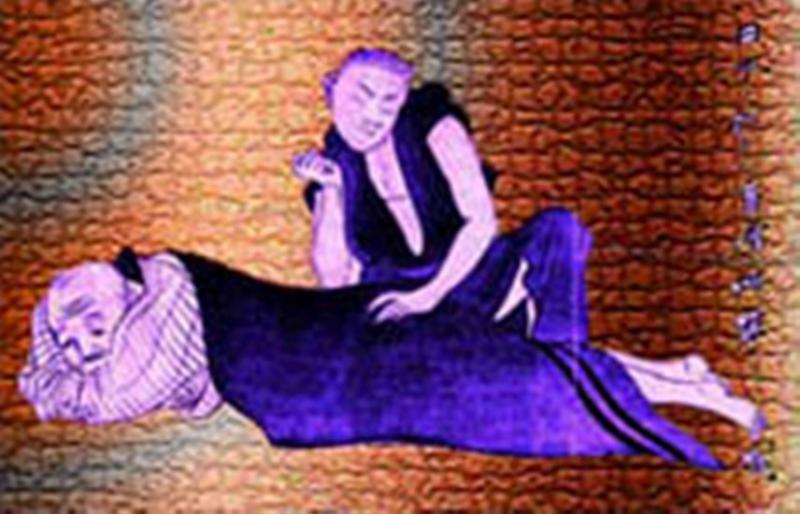
Ancient Chinese Massage-Anmo
The period from the Xia dynasties (21st-16th B. C.), Shang dynasties (16th -11th B. C.) and Zhou dynasties (11th-221 B. C.) to the time when Qin Shihuang (the first emperor of the Qin Dynasty) (221-226 B. C.) united China is called the prior-Qin period in Chinese history. It was recorded in the literatures that in this period there had been a lot of medicinal books circulating among the people. Unfortunately all the books were lost later in wars. Of the great many treatises on medicine compiled by hundreds of scholars, only very a few had been kept down. Therefore the knowledge of the achievements in tuina of this period is mainly from the two important archaeological discoveries: the unearthed oracle inscriptions on bones or tortoise shells of the Yin-Shang Dynasty (16th-11th B. C.) and the records of the medical books from the tombs of the Han Dynasty (206 B. C.-220 A. C.) in tom: Mawangdui at Changsha city. The people of the Yin-Shang Dynasty (16th-11th B. C.) were superstitious and they chiefly used prayer and sacrifice to eliminate illnesses and misfortunes when they were ill. So although there were a lot of records about diseases in the oracle inscriptions on bones or tortoise shells, only very few on treatment with medicines could be seen. Yet in these inscriptions there were many words about tuina therapy, which showed that besides sacrifice, the people of the Yin-Shang Dynasty (16th-11th B. C.) mainly used tuina to treat diseases.
Tuina was their creation and they were very skillful in applying It. Among the medical books, written on silk unearthed in tomb: Mawangdui and named Fifty Two Medical Prescriptions,mostly involved treatment of diseases with tuina. Tuina therapy in this book had two striking characteristics. One was the record about medicated tuina and ointment tuina, which were the earliest methods in the development of tuina in spite of being simple in making. The other was the record of plenty of tuina tools with distinguished features. For example,the taper wood tool used for treating hernia, the copper coin for infantile convulsion and the most characteristic medicated towel.
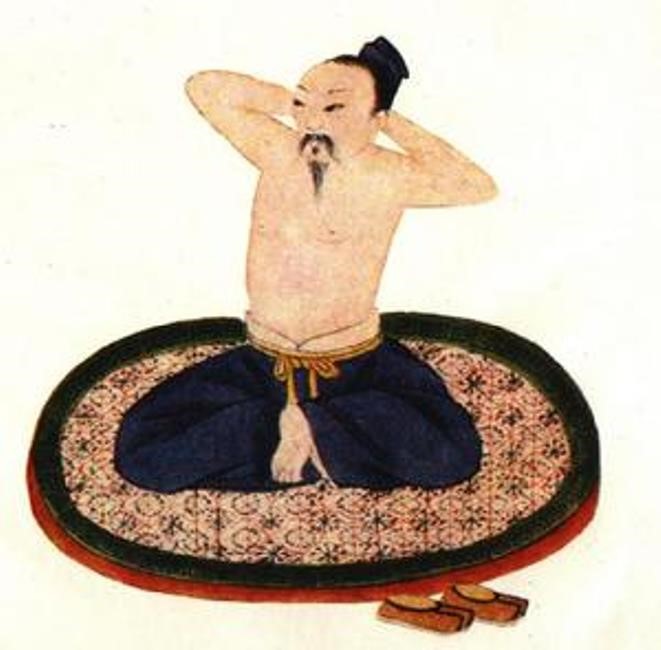
Ancient Chinese Self-Massage (Self-Anmo)
The towel was used to treat certain sexual disorders and for health preservation,which could be counted as a great invention in the history of tuina. In fact,the earliest and most primitive tuina tool was Bianshi (a kind of prepared stone), which had many kinds, and each kind had its own functions. Therefore, it could be concluded that Bianshi was not only used for acupuncture, but also for tuina. The utilization of tuina tools made tuina therapy more effective. The Qin and Han Dynasties (221 B. C.-220 A. C.) were an important period in the developmentof tuina. It was recorded in the book: “Ran Book, Literature and Arts, Methods and Skills” that “Ten Volumes on Tuina of Huangdi Qibo” and “Huangdi Neijing (Yellow Emperor Inner Scripture)”. came out at the same time.
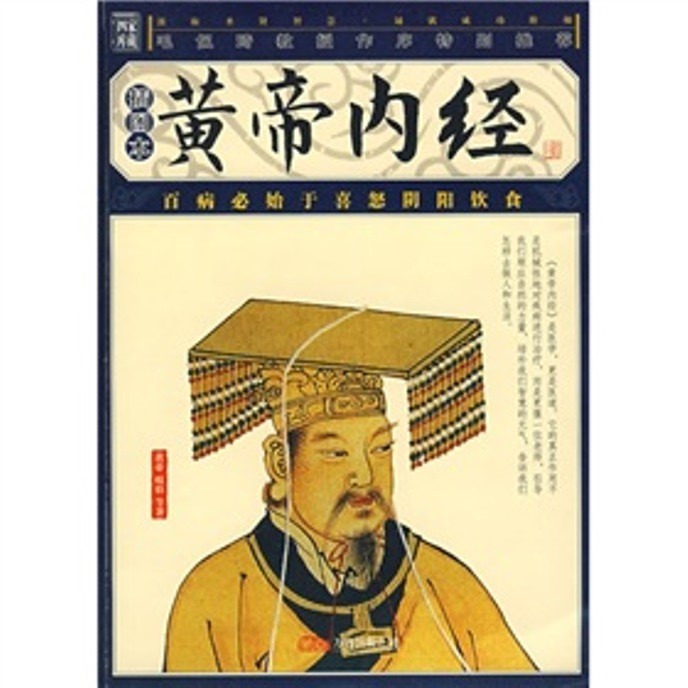
Huangdi Neijing (Yellow Emperor Inner Scripture)
The former was the first monograph on massage in Chinese Tuina history, and the latter was the earliest great TCM works in existence. In classification, “Ten Volumes on Tuina of Huangdi Qibo” must have mainly concentrated on tuina, and by medical origin it was surely one branch of the same source with “Huangdi Neijing (Yellow Emperor Inner Scripture)”, which was the other branch. “Huαngdi Neijing (Yellow Emperor Inner Scripture)” mainly recorded the theories of TCM and acupuncture, while “Ten Volumes on Tuina of Huangdi Qibo” was chiefly about tuina and health care. It was a pity that the great works of ten volumes on Tuina was unable to survive on wars so that nowadays we could not have an all-round understanding of the development of tuina in the time before the Western Han Dynasty (206 B. C.-24 A. C.). Little to our relief,there were some literatures on tuina in “Huangdi's Canon of medicine”. It could be seen through a comprehensive view of Neijing (Yellow Emperor Inner Scripture) that the unique therapeutic system of tuina had been formed in the Qin and Han (221 B. C.-220 A. C.) period. Many paragraphs in the book were the theoretical summarization of tuina treatment from the Yin-Shang Dynasty (16th-11th B. C.). It was pointed out in Neijing that Chinese Tuina originated from and formed in the central region,equivalent to today’s Luoyang area of Henan Province, which was the border of the Yin-Shang (16th-11th B. C.) people at that time. That tallied with the contents of tuina described in the oracle inscriptions on bones or tortoise shells of the Yin-Shang Dynasty (16th-11th B. C.).Inspection : listening and smelling;interrogation and palpation diagnoses are the most important diagnostic methods of tuina. In Neijing (Yellow Emperor Inner Scripture) there were many parts about the application of tuina manipulations to palpation diagnosis,which improved the accuracy of diagnosing diseases.
Huangdi Neijing (Yellow Emperor Inner Scripture)
Neijing (Yellow Emperor Inner Scripture) fully affirmed the therapeutic effect of tuina and held thattuina had the function of promoting qi to activate blood. eliminating cold to stop pain, dredging the meridians and reducing fever to tranquilize the mind. The book also pointed out that attention should be paid to reinforcement and reduction of tuina and its coordination with acumox, meditation and other therapeutic methods. In addition, there were a great many records about tuina manipulations in Neijing (Yellow Emperor Inner Scripture). Pressing, rubbing, cutting, palpating, feeling, clapping, flicking, grasping, pushing, weighing down, flexing, stretching, rocking,and so on,among which pressing an drubbingmanipulations were most commonly used. That was why tuina was also called Anmo (pressing and rubbing) at that time. It was mentioned in Neijing that round needle and Di needle of the nine kinds of acupuncture needles might also be used as tuina tools, and the round one was used for reduction and the Di needle for reinforcement. Discussion and summary about tuina were certainly much more than the above in Neijing (Yellow Emperor Inner Scripture).
Neijing (Yellow Emperor Inner Scripture) established the basic theory of TCM. its main theories were also the most important guiding principles of tuina,which included the theories of zang-fu (internal organs),meridians, yin-yang, five elements,Qi,blood and body fluids and diagnostic methods and therapeutic principles as well. The prominent doctor of the Han Dynasty (206 B. C.-220 A. C.),Doctor Zhang Zhong jing,listed the ointment tuina as one of the methods of health care for the first time in his book: “Synopsis of GoldenChamber”. He also introduced a massage powder for treating headache due to windwith tuina, the prescription only contained Radix Aconiti Praeparataand salt. Modinggao (an ointment for massage on the head) and its similar kinds thatappeared in later time,all derived from it. In the same book Dotor Zhang also carefully recorded a tuina technique for saving persons who hanged themselves, which was generally acknowledged as the earliest scientific method recorded for rescuing the hanged by the medical world and a proud achievement in the history of tuina. Another famous doctor,such as Doctor Hua Tuo promoted the frolics of five animals, which led daoyin (physical and breathing exercises) and tuina close to bionics,and provided a set of effective means of health care for the later generations. He was good at applying ointment massage and the first person to employ the ointment massage extensively in clinic. In a word,from instinctive pressing and rubbing behavior,through long time of accumulation,. up to the summaries made in Huangdi Qibo Anmo (Yellow Emperor Chi-Bo Massage)and Huangdi Neijing (Yellow Emperor Inner Scripture), tuina finally developed into a clinicalsubject with its ownunique therapeutic system. It was not only summarized and improved theoretically, but also became clinically mature and extensive with its own unique feature through the introduction and application of that time's famous doctors Bian Que, Zhang Zhong jing. Hua Tuo. etc.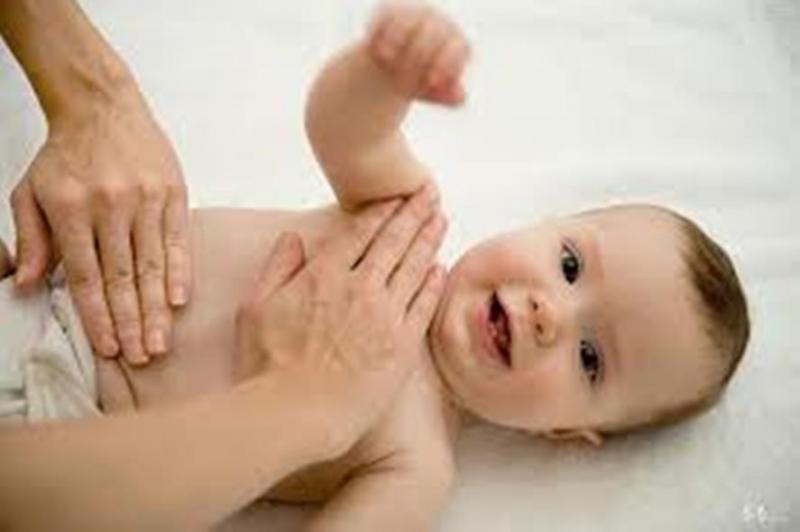
Tuina for Infants
as tuina method of ancient India and Laozi (the leader of Taoism) Tuina could be found in “Handbook of prescriptions
Therefore the Qin and Han Dynasties (221 B. C.-220 A. C.) were both the period of formation of the specific therapeutic system and the flourishing age of tuina,which linked the past and future in its history of development.
In the Jin and Tang Dynasties (265 – 420 A. C.) the rulers gradually valued tuinatherapy. In the Office of Imperial Health of the Sui Dynasty (581- 618 A. C.) the title of massage doctor was authorized for the first time. On the basis
of the Sui's office,Tang’s Emperor set up an Imperial Health Administration with larger scale and better facilities, in which there was a tuina department. Three academic titles were given to masseurs, i. e. massage academicians, massagists arid massage workers. Assisted by the massagists and massage workers,the academicians taught the massage apprentices Daoyin (Guiding) methods (a self-tuina exercise) to take away diseases and rectify injuries. Tunia teaching came to be organized. Self-tuina was also laid stress on in this period. Many records about methods of self-tuina such for Emergencies” and “Valuable Prescriptions” . In each chapter of “General Treatise on the Causes and Symptoms of Diseases”, included daoyin (Guiding) method for health preservation. He especially valued the technique of abdominal tuina for that purpose. The extensive use of self-tuina indicated that massotherapy began to be used for health care and prevention of diseases and for exertion of patients’ subjective initiative in fighting against diseases. The complementing effect of medication and tuina manipulations greatly promoted the development of massotherapy. There was a Doctor Ge Hong. He took application of ointment tuina seriously and was the first specialist to expound it systematically and make it perfect in syndrome, therapeutic principle, prescription and medication.
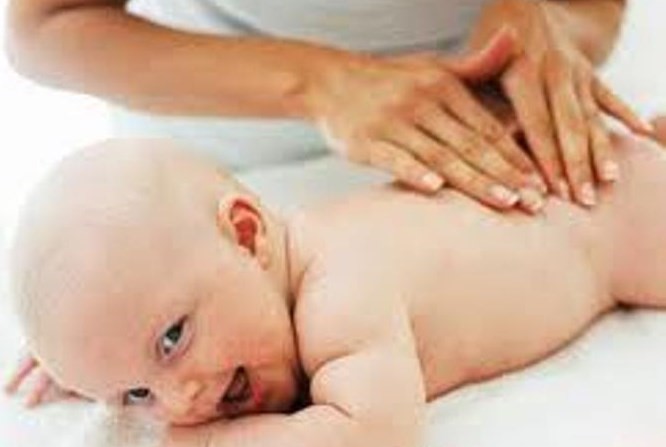
Pediatric Tuina Massage
He said that illnesses occurring newly or in the past needed different therapies; ailments in the superficial parts of the body responded well to ointment and tuina. He also stressed that aquick result could be obtained by rubbing forcefully until heat produced and that when a patient was placed close to fire and rubbed with hand twice or three times a day, good effects would be gained after hundreds of times of operation. In his above-mentioned book, he recorded eight medical formulae of ointment tuina,which were mostly from the celebrities at that time. In addition to the recipe with ointment tuina, two other tuina skills with salt and decoction were added in “Medical Secrets of an Official”,in which many famous prescriptions of ointment tuina with their sources were listed too. The therapeutic indications of tuina were also gradually expanded in this period. For instance, in six Classics of the Tang Dynasty (618-907 A. C.), there were records about eight kinds of diseases caused by pathogenic wind, cold, heat, dampness, hunger, overeating, overwork and lack of exercise, which could be treated with tuina. In the book called as “Waitai Miuao (Waitai Secrets)” a record about tuina used for In the Song (960 – 1279 A. C.), Jin and Yuan Dynasties (1271 – 1368 A. C.) massotherapy gained more extensive use and the doctors attached more importance to the analysis of tuina manipulations. There was a specific book, called as “General Collection for Holy Relief”, the professional treatise on tuina was listed in the first place, in which summaries and induction of massotherapy were made. It was the earliest and most complete tuina works in existence. In the book the author first made some explanation of the implications of pressing and rubbing and their distinction: Pressing and rubbing are sometimes used in combination,in this case they are generally called pressing-rubbing or Anmo. But pressing is not rubbing, and rubbing is not pressing, for pressing is done only by hand while rubbing can also be administrated with the aid of medication. Which to be used,pressing or rubbing, just
EFD (exogenous febrile disease) could be seen,which said when EFD was first caught with headache and stiffness in the back, tuina could be applied with satisfactory results. It was in this period that tuina techniques were introduced into Korea, Japan, India, Europe and some Arabic countries.
of Neijing the author elaborated on the applicable indications of massotherapy,and pointed out under what conditions pressing manipulation can stop pain,not be effective, make pain severe and gain a comfortable sensation. This differentiation was very significant in guiding the clinical application of tuina. Though the treatise on tuina in book “Shengji general records of Medicine” was not long, it made
depends upon their suitability to cases. The writer also believed that massage should be distinguished from daoyin (guiding). He pointed out that there existed a tendency not to differentiate the former from the latter in explanation and to confuse them in use,which showed lack of sufficient reflection. Next the author made an incisive summary of the mechanism of massotherapy: Generally speaking,the purpose of tuina therapy completely lies in removal and inhibition. Removal means eliminating or dispersing the obstruction,while inhibition is to have the hyperaction under contro!. His inference was considered an incisive summarization of the function of tuina and greatly valued by the later generations. Afterwards, on the basis of the original recorded ointment formulae about treating eye diseases by rubbing the top of the head, which were the earliest records in this problem. the book also recorded for the first time some ointment recipes of rubbing the lower back, and it was a medical book recording the most prescriptions of ointment tunia of a kind from every dynasty and most greatly influencing the development of ointment tuina of the later generations. Among the four medicalcelebrities of the Jin and Yuan Dynasties, Doctor Zhang Congzheng was the one who introduced the most about tuina. In his book (Essential Affairs in the Confucianists), he classified pressing and rubbing as Ranfa (diaphoretic therapy), which could really be a distinctive view surpassing his predecessors. The method for correcting dislocation of shoulder joints by sitting on a stool or supporting a ladder, reduction of dislocated hip joints by downward hanging and reduction of fracture of spine by suspension recorded in the book (Curative Prescriptions forDoctors in the World) could be used to replace traction manipulation. That was an important invention in the history of tuina and set up a new remedy to cure bone diseases with instrumental traction in Chinese medical history. he Ming and Qing Dynasties (1368 – 1911 A. C.) witnessed another flourishing age in the history of tuina development. In the field of infantile tuina professional works were published in succession. Book called as: Imperial Physician’s Complete Classic of the Secret Principles of Tuina to Bring Infants Back to Life,also called as Complete Classic of Infantile Tuina,was the earliest published book in separate edition. the Secret of Infant Tuina Therapywritten by Doctor Zhou Yufan most vividlydescribed eight manipulations. The same kind of book : Elucidations of Tuina for Infants had attached remedies commonly used for children, which was considered the perfect book in the Qing Dynasty. Doctor Xia’s book: the Iron Mirror of Pediatrics, showed ingenuity and had many more differences from other books. He also wrote “the Prose of Tuina Used for Replacing Medication” which made people find everything fresh and new. Secrets of Tuina of Pediatric Speciality,written by Doctor Luo Rulong,was the most minute and incisive book with clear presentation,and a shortcut of learning infantile tuina. the Three-character Classics on Tuina,written by Doctor Xu Qianguang,is read smooth and rhythmic. If it is learned by heart,you can employ them with high proficiency in treatment. Doctor Zhang Zhenjun absorbed the strong points of many scholars and put forward for the first time eight manipulations of infantile tuina, in his book: Revised Synopsis of Tuina. The eight manipulations of infantile tuina were: pressing, Rubbing, nipping,Kneading, pushing, arc-pushing, palm-twisting and rotating, which symbolized the formation of independent therapeutic system of infantile tuina. Meanwhile,adult tuina was further developed.
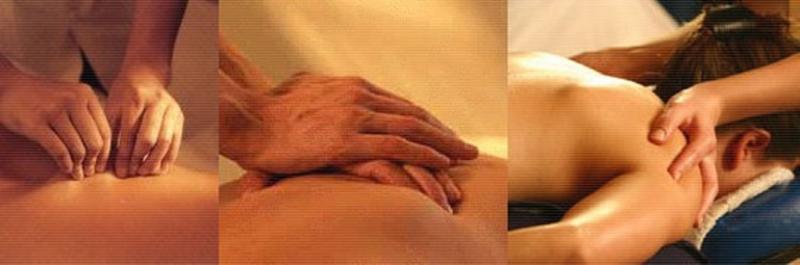
Grabbing, Pressing and Pushing
It presented a situation of hundreds of flowers blossoming and decades of schools coming into being,such as bone-setting tuina, point-pressing tuina, one finger meditation tuina, eye tuina. surgery tuina,internal exercise tuina, keep-fit tuina,too numerous to enumerate. In a word,the Ming and Qing Dynasties (1368-1911 A. C.) were an important period of overall development, summarization and creation in the history of tuina.
The Republic of China constituted the key period of linking up the preceding and the following and formingschools in the history of tuina. These schools included one-finger manipulation tuina, meridian and visceral tuina, point-pressing tuina, abdominal diagnosis tuina internal exercise tuina, rolling tuina, gastropathy tuina, etc.
point-pressingtuina
Yet owing to some historical limitations the academic schools of tuina were developed only among the people. inherited and taught in the master-apprentice mode and passed on through oral instruction and learned by heart. It was a pity that they could not be sorted out systematically and fostered and enhanced.
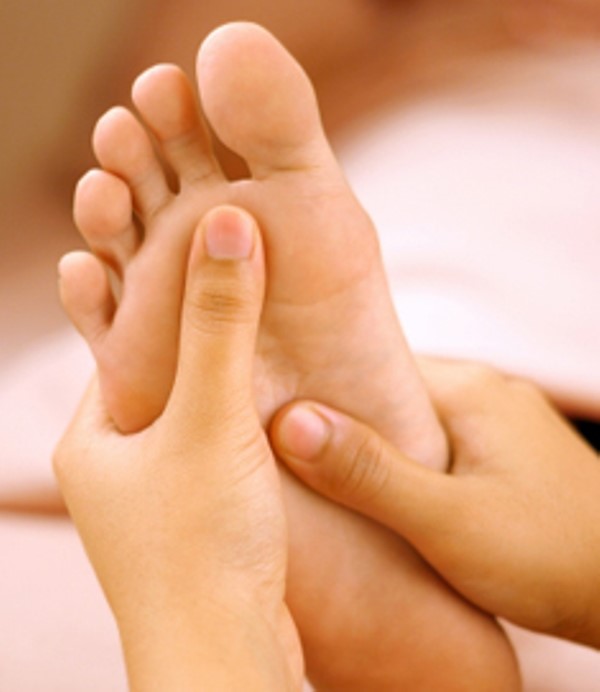
Foot-Tuina
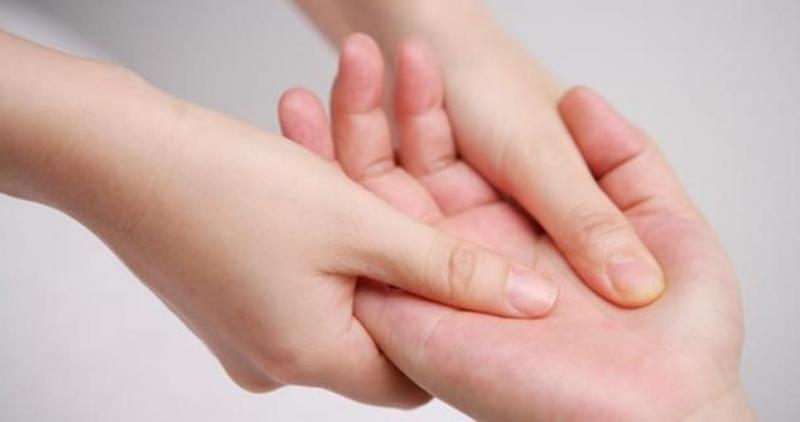
Hand-Tuina
3, Research and Advance of Chinese Tuina
Ever since the founding of the People's Republic of China. tuina medicine has entered an overall new developing period. The main achievements of tuina study and advance in this period were embodied in the following five aspects:
1, Firstly,ancient books on tuina were excavated and sorted out, and a lot of new works on tuina were published. Besides the ancient books sorted out and published again, which were mostly specialized treatises on infantile tuina, in this period there were restricted publications: “Fixed Two-finger Medical Function” and “One-finger Treating as Spring Season”,etc., Which made contributions to the excavation of ancient Medical tuina books. New works on tuilla included the followings:
1), popular literatures which are of combination of basic theories with clinical knowledge.
2), Books in the form of clinical specialities.
3), Books which are of characteristic of schools or unique experience.
4), Specific treatises on manipulations or exercises.
5), Great complete works. Among them were “The Complete works ofAnmo”, “Chinese Tuina”,”the Great Collection of Chinese Tuina”,etc. A general survey showed that all the works had the common features of the enhancement of science and logic of tuina. the breakthrough in tuina principle,the increase of proofs of modem researches and the combination of treatment of diseases with diagnostic and anatomic knowledge of Western medicine.
2, Secondly. the practice and summarization of clinical experience of tuina became more scientific day by day. The progress of science and culture and the development of health and medicine made tuina practice more scientific. The accumulated rich experience in practice and the education of modern medical knowledge raised the quality of massagists greatly. For example, diagnosis of tuina was no longer confined to the traditional four diagnostic methods. Many massagists have commanded modem medical techniques such as X-ray examination, ultrasonic scanning. electromyography examination, CT examination and nuclear magnetic resonance. In treatment sectarian bias were gradually thrown away.
Massagists have mastered a set of theories of treatment based on syndrome differentiation. They are able to select and employ the best ones from the principles,methods, prescriptions and techniques. Thousands of theses on tuina have been published in many sorts of periodicals of China.
Which summed up tuina therapy from all respects scientifically and offered an important guide to tuina clinic.
3, Thirdly,the teaching system of tuina has been improving day by day. Since Shanghai Health SchooI started a tuina training class in October of 1956,tuina teaching has gone out of the old master-apprentice mode and has been on the way of formal education. Since the late 1970s, and early 1980s, all the TCM colleges in China have organized tuina specialty one after another and consummated the educational system of tuina subject including professional training. undergraduate, postgraduate, doctorate and international education, which have trained quite a lot of advanced specialists on tuina. Tuina teaching activities have been carried out at all TCM colleges of China and the foreign exchanges has greatly increased. Textbooks of tuina have also possessed different styles and different levels. With the development of tuina subject,tuina teaching has divided into different courses: basic tuina,tuina therapy,tuina manipulation. tuina exercise training, and infantile tuina, etc.
4, Fourthly,scientific researches into tuina has been advancing rapidly. Since the 1950s scientific researchers on tuina have conducted extensive clinicaI and experimental studies of the functional mechanism of tuina by means of modern scientific and medical knowledge and made exciting progress. For instance, the gate control theory in neurophysiology was employed to successfully explain the analgesic principle of tuina. It was deduced that the distinct changes of circulating speed of blood and lymph- vascular fluid before and after tuina manipulations might be one of action principles of eliminating swelling and blood stasis with tuina. It was also demonstrated that lowering blood pressure by tuina had a stable effect,the contents of 5-HT in the blood increased after tuina treatment and the therapy of nipping the spine apparently promoted the absorption of the small intestine.
5, Finally, many new tuina therapies have been summed up and created such as ear point tuina, foot point tuina, the second metacarpal bone tuina, sports tuina and anesthesia by tuina. In a word, today's China is in the unprecedented golden age in the history of tuina. There appears a flourishing situation in tuina practice teaching. scientific research, publication of works and periodicals and the construction of tuina practitioners.
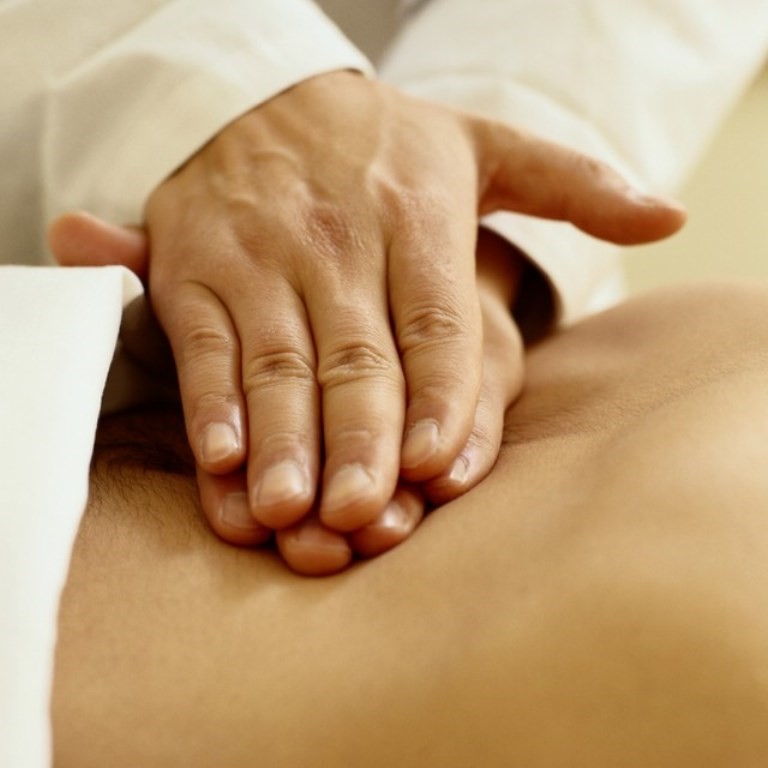
Back Pressure with Qi Connnection
4, How to Learn Chinese Tuina
Chinese Tuina is a clinical subject of TCM with intensive theory and practice. Tuina doctors should not only have the basic knowledge of Chinese and Western medicine,understand the methods of diagnosis and treatment based on syndrome differentiation, have specialized in theoretical knowledge of tuina. but also possess a good physical constitution and proficient manipulation techniques for clinical practice. So in addition to the study of elementary theories of Chinese and Western medicine. the students of tuina speciality must systematically study tuina courses and carry out strict constitutional physical exercise and technical training in manipulation. In respect of medical elementary theories, the study of TCM theories of yin-yang, five elements, “zang-fu” organs, meridians,weiqi, ying, yang , and blood, cause and mechanism of diseases,four diagnostic methods and eight principles, differentiating syndrome to decide treatment and the study of anatomy, physiology, pathophysiology, pathoanatomy and physical diagnosis of Western medicine should be put at the first place. Anatomic structure of the human body,athletic physiology,neural segments,circulation of the fourteen meridians. Location and function of commonly used points have great practical value in tuina practice. Students should especially master them.
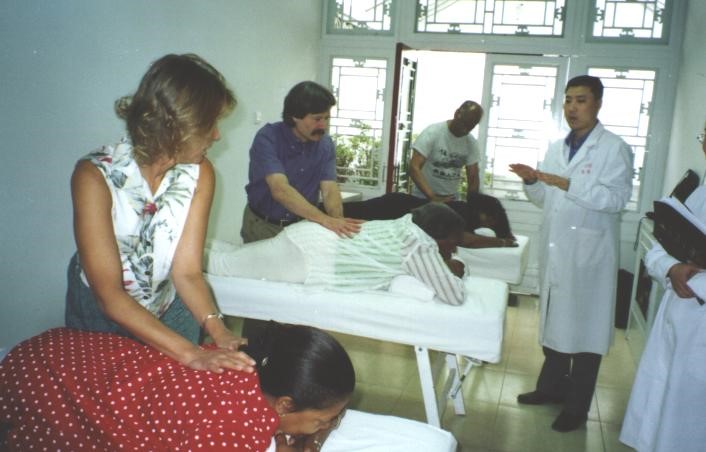
Hands on training at Beijing Massag Hospital
In professional technical training students should first do the common exercises hard with the methods step by steps. During the exercise both the training of physical constitution including strength,endurance,pliability and toughness and the cultivation of psychological quality should be devoted to. That means while building up one's physique. one should develop indomitable willpower and quality to bear hardships and stand strenuous work so as to lay a good foundation for the long-term tuina practice in future. Next,. under the guidance of teachers,one should seriously learn and practice all kinds of manipulations introduced,fully and strictly accomplish the training in the three elementary stages. which refer to training on a sand sack,training on the human body and training of manipulations in treating commonly encountered diseases. Furthermore, one should study carefully the parts of tuina therapy and combine them with frequent clinical practice so as to improve the result of study.
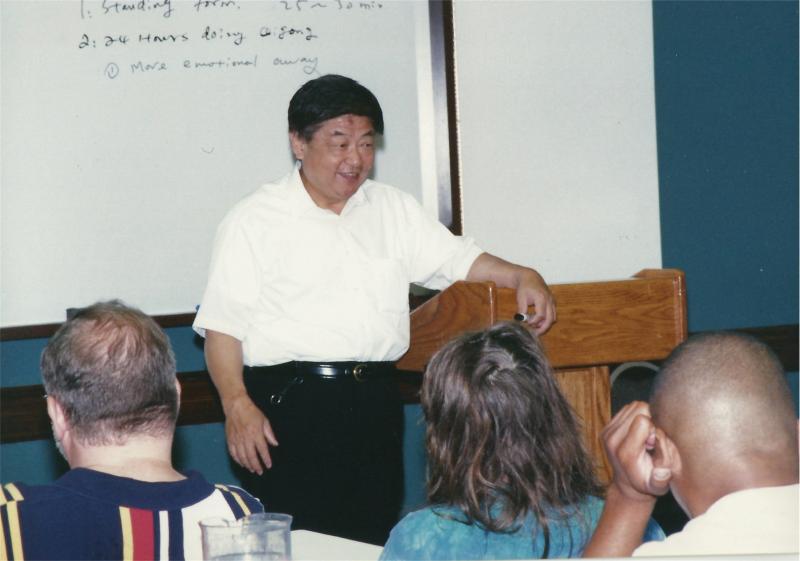
Master Hao Qi Healer Training Tuina Course
Generally speaking, after a period of conscientious training, for those with some knowledge of medical science. it is not too hard to cross the threshold of tuina within a short period of time. But it is difficult to come up to professional standards, particularly hard to gain a perfect command and serviceable application of some technically difficult Manipulations such as pushing manipulation with one-finger medication, rolling manipulation in clinic. So a long period of special training is the only approach to reach the realmonce in clinicwhile you massage the exterior of the body,effect can produce in the interior. Your hands manipulate along with the mind's meditation and curative therapy comes out of your excellent manipulations, as stated in the Golden Mirror of Medicine.
P.O, Box 3002
Saratoga, CA 95070
ph: (408)868-8756
info